
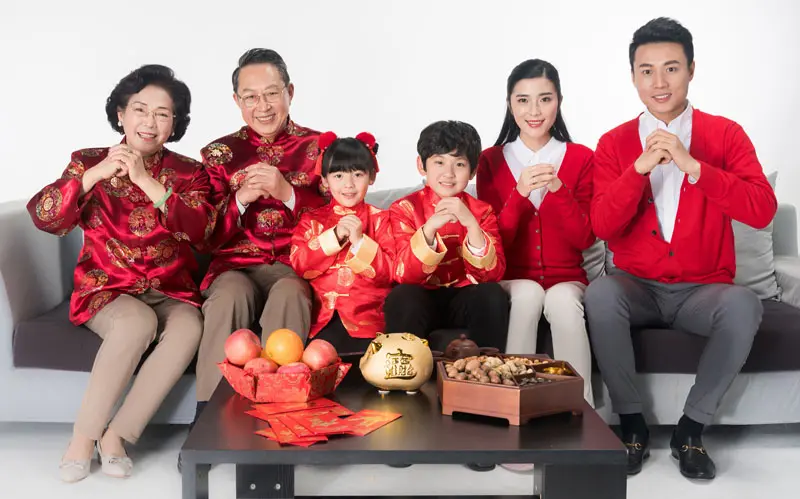
Chinese New Year is the biggest celebration of the year for hundreds of millions of people. Families travel long distances to share a reunion dinner, homes are decorated in red, children receive red envelopes, and everyone trades good wishes for the months ahead. A kind message is part of the tradition.
If you are looking for Chinese New Year wishes that sound sincere and respectful, this guide can help. You will find ready-to-send messages in English, classic Chinese greetings with pinyin, and tips on choosing the right words for family, friends, coworkers, and clients.
Featured image idea: A table with red lanterns, a plate of dumplings, and a red envelope, lit by warm evening light.
What Are Chinese New Year Wishes?
Chinese New Year wishes are greetings shared during the Spring Festival. They express hopes for good health, happiness, prosperity, and peace in the coming year. People send them by text, in cards, on red envelopes, in family group chats, and in person during visits.
Many wishes follow the same themes:
Good fortune and prosperity
Health and long life
Family unity and reunion
Success in work and study
Peace, safety, and a smooth year ahead
Traditional greetings are often short four-character phrases that rhyme or carry symbolic meaning, which is why many people enjoy learning a few.
When Is Chinese New Year 2027?
Chinese New Year follows the lunar calendar, so the date changes every year. In 2027, it falls on February 6, and it begins the Year of the Goat (also called the Year of the Sheep or Ram). The reunion dinner is held the evening before, on New Year’s Eve.
The festival lasts about 15 days and ends with the Lantern Festival, which falls on February 20, 2027. Since the date moves, check a trusted calendar if you are planning cards or events.
How Is Chinese New Year Celebrated?
Understanding a few customs helps you write more thoughtful wishes:
Reunion dinner: Families gather on New Year’s Eve for a large meal, often including dumplings, fish, and sticky rice cake.
Red envelopes (hongbao): Money in red envelopes is given to children and unmarried younger relatives as a blessing.
Decorations: Red lanterns, paper cuttings, and couplets with good wishes hang on doors.
Fireworks and lion dances: Traditionally used to welcome good luck.
Visiting relatives: In the first days, people visit family and friends and exchange greetings.
Lantern Festival: The final day, with glowing lanterns and sweet rice balls.
Chinese New Year is also celebrated in Vietnam (Tết), Korea (Seollal), and many communities around the world, each with its own traditions.
Why Do Chinese New Year Wishes Matter?
They carry real meaning. Many phrases are wishes for luck and blessing, not just polite greetings.
They honor family and elders. Greeting older relatives with respect is an important part of the holiday.
They connect communities. For people who live far from home, a message in a familiar language can feel like a warm hug.
They show cultural respect. If you are not Chinese yourself, a thoughtful greeting tells friends and colleagues that you value their traditions.
Classic Chinese New Year Greetings With Pinyin
Here are well-known phrases and what they mean. Tones are shown in pinyin.
| Chinese | Pinyin | Meaning |
|---|---|---|
| 新年快乐 | Xīnnián kuàilè | Happy New Year |
| 恭喜发财 | Gōngxǐ fācái | Wishing you prosperity |
| 万事如意 | Wànshì rúyì | May everything go as you wish |
| 身体健康 | Shēntǐ jiànkāng | Good health |
| 心想事成 | Xīn xiǎng shì chéng | May your wishes come true |
| 岁岁平安 | Suì suì píng’ān | Peace every year |
| 年年有余 | Nián nián yǒu yú | May you have abundance every year |
| 大吉大利 | Dàjí dàlì | Great luck and good fortune |
| 羊年大吉 | Yángnián dàjí | Good fortune in the Year of the Goat |
| 三阳开泰 | Sān yáng kāi tài | A classic phrase for a goat year, meaning a good start and rising fortune |
Cantonese greeting: In Cantonese-speaking communities, people often say “Gung hei fat choi” (恭喜發財), which is similar to the Mandarin “Gōngxǐ fācái.”
Tip: A common mistake is to treat “Gōngxǐ fācái” as the only greeting. In many families, “Xīnnián kuàilè” or a health-focused wish is just as common, and sometimes preferred for elders.
Chinese New Year Wishes for Family
Family messages should feel warm and respectful.
“Wishing our family health, happiness, and a table full of good food this new year.”
“Thank you for everything you do for us. May the new year bring you peace and good fortune.”
“May this year bring more laughter, closer bonds, and a home full of warmth.”
“Wishing you good health and a happy heart in the Year of the Goat.”
“I’m grateful to share another reunion dinner with you. Happy New Year!”
“May luck, joy, and good news find their way to our door.”
“Wishing you smooth days and plenty of reasons to smile this year.”
“No matter how far I am, my heart is at the family table. Happy Chinese New Year.”
Wishes for Parents and Grandparents
Respect and health are the most important themes for elders.
“Wishing you good health, a peaceful mind, and many happy years ahead.”
“Thank you for all your love and sacrifice. May the new year bring you comfort and joy.”
“May you be surrounded by family and good news this year.”
“I wish you strength, rest, and laughter in the new year. Happy Chinese New Year, Mom and Dad.”
“Sending my respect and love to my grandparents. May your year be full of blessings.”
Tip: Health wishes are especially valued by older relatives. A phrase like “Shēntǐ jiànkāng” (身体健康) is simple and always welcome.
Wishes for Friends
“Happy Chinese New Year! May your year be lucky, relaxed, and full of good food.”
“Wishing you success, good health, and plenty of laughter in the Year of the Goat.”
“May this year bring you everything you worked for and a few lucky surprises.”
“Thanks for being a great friend. Here’s to a bright, prosperous year ahead.”
“May your new year be full of dumplings and zero stress.”
“Wishing you big wins, small joys, and great company all year long.”
“Gōngxǐ fācái! May good fortune follow you everywhere.”
Wishes for Children and Students
Children love short, cheerful messages, and the red envelope tradition makes the day especially exciting.
“Happy New Year! May you grow healthy, strong, and full of curiosity.”
“Wishing you a year of good grades, good friends, and lots of fun.”
“May your new year be full of learning and joy.”
“Study hard, play hard, and enjoy your red envelope!”
For teachers, a simple card with “Thank you for helping us grow. Wishing you good health and a happy new year” is warmly received.
Professional Chinese New Year Wishes for Colleagues and Clients
Business greetings should be polite, warm, and inclusive.
“Wishing you and your family a prosperous and happy Chinese New Year.”
“Thank you for your partnership this past year. May the Year of the Goat bring you success and good health.”
“Happy Lunar New Year to you and your team. May the year ahead bring growth and good fortune.”
“Wishing you a joyful holiday and a smooth start to the new year.”
“Thank you for your trust and support. I look forward to another year of working together.”
Tip: If you work with international teams, “Lunar New Year” is a widely used inclusive term. For Chinese colleagues, “Chinese New Year” or “Spring Festival” is usually fine as well.
Wishes for Loved Ones Far Away
Many people spend the holiday away from home. A thoughtful message can mean everything.
“I wish I could be at the reunion dinner. Know that I’m with you in spirit.”
“Distance can’t change how much I miss you. Happy New Year, and stay well.”
“I’ll be thinking of you tonight as the family gathers. Wishing you warmth and joy.”
“Next year, I promise to be at the table. Until then, sending all my love.”
Romantic Chinese New Year Wishes
“Another year with you is the best fortune I could ask for.”
“May the new year bring us more peaceful days and happy memories.”
“I’m grateful to start the year beside you. Happy New Year, my love.”
“Here’s to another year of dinners, laughter, and love.”
Short Chinese New Year Wishes and Captions for Social Media
“Red lanterns, warm hearts.”
“New year, new luck.”
“Dumplings, family, and good fortune.”
“Wishing you health, happiness, and abundance.”
“Cheers to a prosperous Year of the Goat.”
“Gōngxǐ fācái!”
“Reunion tables are the best tables.”
These suit Instagram, WhatsApp, WeChat, and Facebook.
How to Write Your Own Chinese New Year Wishes
Know your audience. Is it an elder, a colleague, a friend, or a child?
Choose a theme. Health, family, prosperity, and happiness are always appropriate.
Add a personal detail. Mention a shared memory, meal, or tradition.
Include a classic phrase. Adding one Chinese greeting makes it feel festive.
Keep it short. Two or three sentences are usually enough.
Example: “Wishing you and your family a healthy, happy, and prosperous Year of the Goat. Thank you for all your kindness this year. Xīnnián kuàilè!”
Etiquette: Doing It Right
A few thoughtful details help your message land well:
Use the right tone. Show extra respect to elders, and lean on health and happiness wishes.
Stay positive. Traditionally, people avoid words linked to illness, death, or bad luck during the festival.
Mind red envelopes. If giving one, use new bills and a red envelope. Many people avoid amounts with the number four, because it sounds like the word for death in Chinese. Even numbers are generally preferred, and eight is considered lucky.
Greet on time. The first few days of the festival are the best moment, though greetings are welcome until the Lantern Festival.
Don’t force the language. If you are not fluent, one correctly pronounced phrase is better than many mistakes. Asking a friend how to say it is a kind gesture in itself.
Common Mistakes to Avoid
Assuming all Asian New Years are the same. Vietnamese Tết and Korean Seollal share the timing but have their own customs and greetings. Use the right name for the right person.
Using the wrong tone for elders. A joke that suits a friend may feel too casual for a grandparent.
Copying one message to everyone. Change the name and add something personal.
Using negative words. Avoid phrases that mention misfortune or hardship during the festival.
Mispronouncing or mistyping Chinese. If you add Chinese characters, copy them carefully from a reliable source. Mixing up similar characters can change the meaning.
Sending too late. The best time is the first week of the festival.
Ideas to Make Your Greeting Stand Out
Send a handwritten card, ideally in red or gold
Include a photo of a past family celebration
Record a short voice message for an older relative
Give a small gift of fruit, tea, or sweets, presented with both hands
Join a local lion dance, temple fair, or community celebration
Cook a festive dish with family or friends
Frequently Asked Questions About Chinese New Year Wishes
What is the most common Chinese New Year greeting?
“Xīnnián kuàilè” (新年快乐) means Happy New Year, and “Gōngxǐ fācái” (恭喜发财) is a popular wish for prosperity. Both are widely used.
When is Chinese New Year 2027?
It falls on February 6, 2027, and begins the Year of the Goat. The festival runs for about 15 days, ending with the Lantern Festival on February 20.
What should I write in a Chinese New Year card?
Start with a warm greeting, add a wish for health or prosperity, and include a personal note. Two to four sentences are enough.
Can I say “Happy Chinese New Year” if I am not Chinese?
Yes. Friendly greetings are generally appreciated, especially when they are sincere and respectful.
What is the difference between Chinese New Year and Lunar New Year?
Lunar New Year is a broader term for the holiday celebrated by many Asian cultures. Chinese New Year refers to the Chinese celebration specifically.
What are good Chinese New Year wishes for coworkers?
Polite, positive wording works best, such as “Wishing you a prosperous and happy new year. Thank you for all your hard work.”
What do people give for Chinese New Year?
Red envelopes with money are the most common gift for children and younger relatives. Fruit, tea, and sweets are also traditional, especially when visiting.
Conclusion
Chinese New Year wishes are more than polite greetings. They are blessings that tie families together, honor elders, and welcome a hopeful year. You do not need perfect Mandarin or a long speech. A warm message with a personal touch, and perhaps one classic phrase, will always be appreciated.
Pick a message from this list, adjust it for the person you have in mind, and send it with sincerity. Xīnnián kuàilè, and may the Year of the Goat bring you health, happiness, and good fortune.